
House Washing in Summerville, SC
Low-pressure soft washing that lifts algae, mildew and grime off your siding without driving water behind it.
What house washing covers
House washing is the service I get asked about most, and for good reason. It is the fastest way to make a Lowcountry home look cared for again. I clean the siding, the eaves and soffits, trim, shutters, gutters’ exterior faces, and the foundation skirt. I work around windows, doors, light fixtures, and outdoor outlets carefully, and I keep the cleaning solution off your plants by pre-wetting them and rinsing them after.
This is exterior siding work. It is not roof cleaning and it is not interior. If your roof has the same black streaks, that is a related but different job, so just ask me about it when we talk.
Want the concrete handled at the same time? Most folks pair a wash with driveway and sidewalk cleaning so the whole front of the house resets in one visit.
How I do it (soft washing, the right way)
Soft washing is the correct method for siding, and I want to be plain about why. Vinyl, fiber-cement, and painted siding need low pressure, somewhere around 60 to 100 PSI, plus a cleaning solution. The solution kills the algae and mildew. The low-pressure rinse carries it away. High pressure does the opposite of what people think it does. It can crack panels, strip paint, furr up wood trim, and drive water behind the siding where it has no business being.
Here is my process. I walk the house with you first so we agree on the trouble spots. I cover and pre-wet plants and shrubs. I spot-test a small area to make sure the solution will not react with your paint or any older pigment. Then I apply the solution from the bottom up, let it dwell so it can actually kill what is growing, and rinse from the top down with low pressure. The north and shaded sides usually need the most attention, because that is where algae takes hold first.
Brick, stucco, and vinyl
Brick and stucco can take the cleaning solution well and rinse clean. Vinyl is the most common siding around Summerville and it responds great to a soft wash. Painted and fiber-cement siding get the gentlest touch, because pigment and coatings deserve respect. Whatever you have, the method bends to the surface, not the other way around.
Why this matters in the Lowcountry
We live in a humid subtropical climate that gets close to fifty inches of rain a year, with the wettest stretch landing in late summer. Summers run hot, highs near ninety with a heat index that climbs past a hundred. That combination of heat, moisture, and shade is a greenhouse for algae and mildew. North-facing walls green up first because they stay damp the longest.
Closer to the coast and the marsh, you also get a salt film riding in on the air. It dulls your siding and helps grime cling. None of this means anything is wrong with your house. It just means exterior surfaces here need a wash more often than they would somewhere dry, and doing it right protects the finish you already paid for.
What affects the scope
Every house is different, so I look at a few things before I quote. The size and number of stories matter. So does how much growth is on the walls, whether you have heavy shade or a lot of north-facing surface, the siding material, and how reachable everything is. A simple one-story vinyl ranch is a different job from a tall, heavily shaded home tucked under live oaks. I will give you a straight price after I see it.
Get on my schedule
I am Kenny, I run Blue Tiger myself, and I do every job personally. If your siding is streaked, green, or just looking tired, call or text me at 843-530-0702 and tell me what you are seeing. You can also reach me through the contact page. I will take a look, give you an honest price, and get your home looking right again.
Recent work
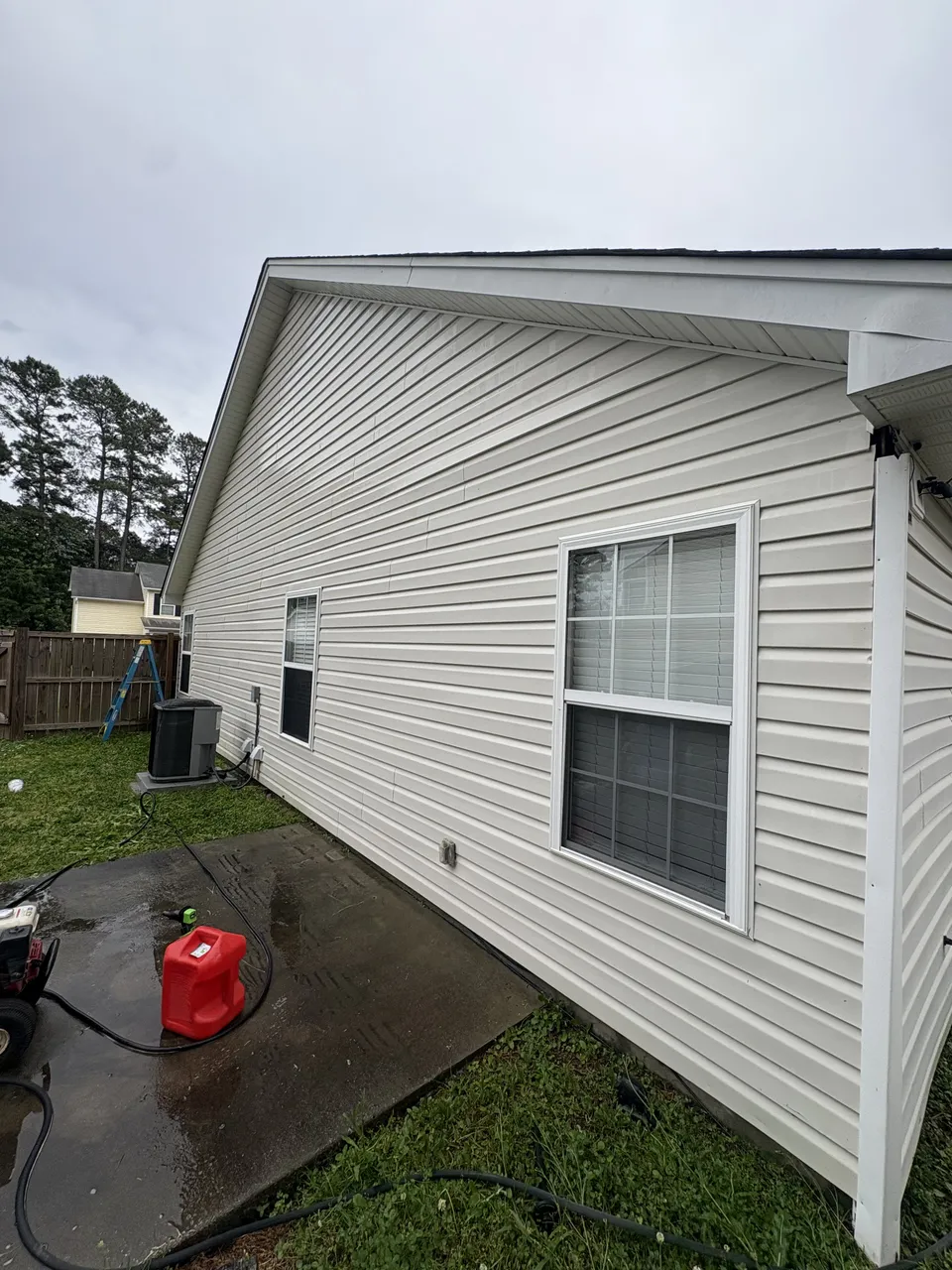
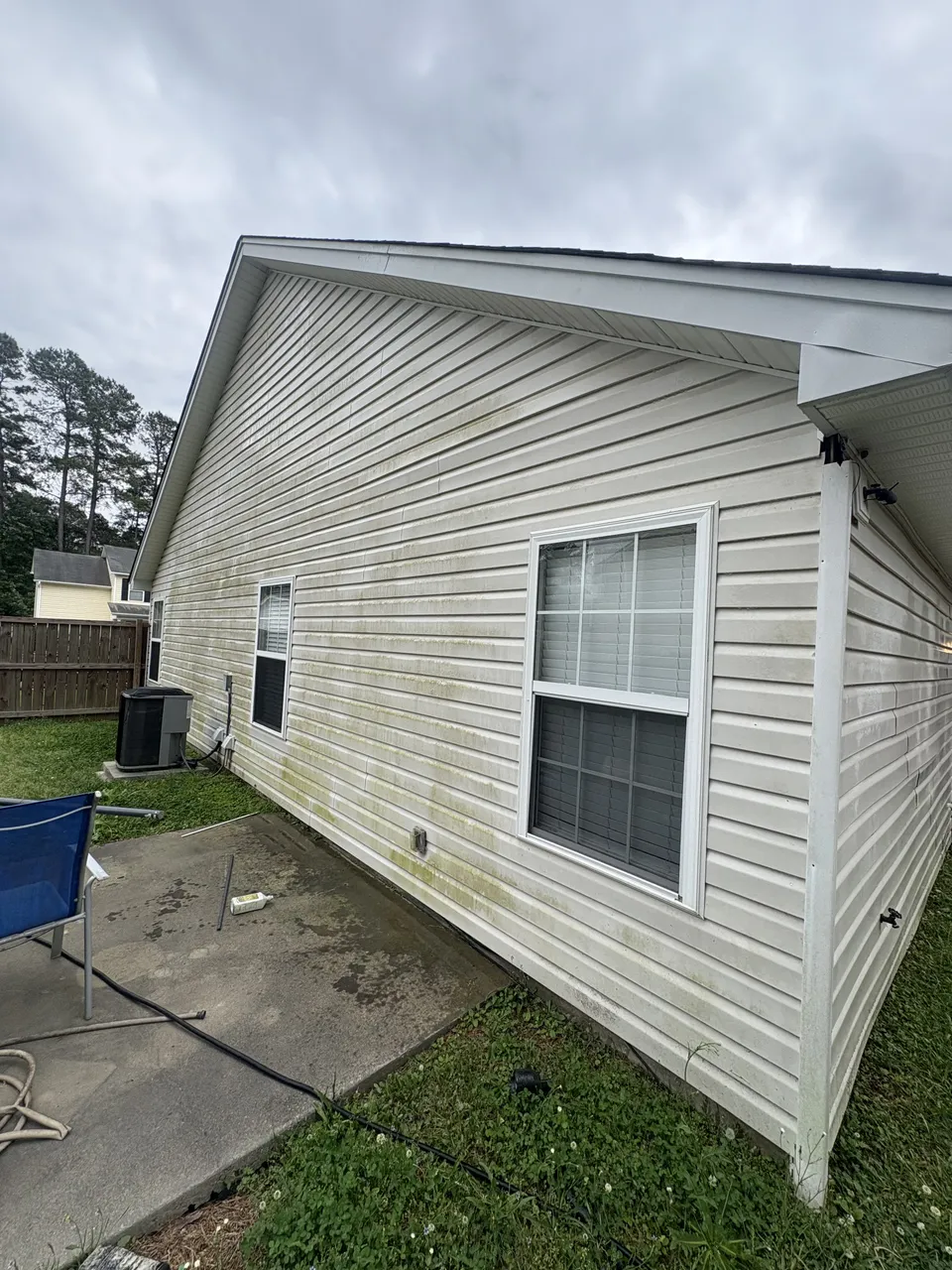
Frequently asked questions
Will soft washing damage my siding?
No, and that is the whole point of doing it this way. Soft washing uses low pressure, around 60 to 100 PSI, paired with a cleaning solution that does the actual work of killing algae and mildew. High-pressure blasting is what damages siding, because it can crack vinyl, etch paint, and force water up behind the panels where it sits and causes problems. I spot-test first so the solution does not react with paint pigment.
How often should I have my house washed in the Lowcountry?
Most homes here look their best on a yearly wash, and shaded or north-facing homes sometimes want it a little sooner. Our humidity and long warm season let algae come back faster than it does in drier climates. If you notice green or black creeping back on the shaded side before a full year is up, that is normal for this area and an easy reason to get back on a schedule.
What are the black streaks on my roof and siding?
Those black streaks are a hardy algae called Gloeocapsa magma, and the green fuzz is regular algae. Both feed on moisture, shade, and the organic film that settles on your walls. They are extremely common on Lowcountry homes and they are not just dirt, so rinsing with water alone will not remove them. The cleaning solution in a soft wash kills them at the source.
Do you need to use my water and power?
Yes, I tap into an outdoor spigot and a standard exterior outlet, and that is all I need. Just make sure I can reach the spigot and that it has decent flow. If your water pressure is low or a spigot is broken, let me know when we talk so I can plan around it. I will leave everything the way I found it.
Can you get the salt film off a home near the water?
Yes. Homes closer to the coast and the marsh carry a fine salt film that dulls siding and helps grime stick. A soft wash rinses that film off along with the algae and mildew. If you are out toward Mount Pleasant or the islands, this is worth doing on a regular basis because the salt never really stops settling.
Ready to make it look new?
Call or text Kenny for a fast, no-pressure quote. He does every job himself.